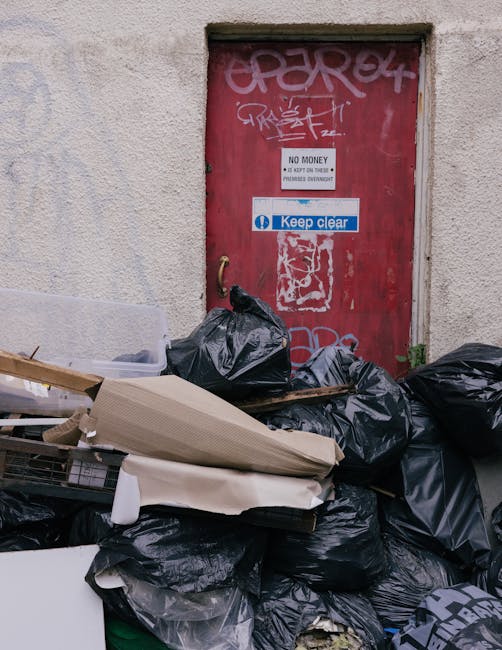
Avoid hidden fees in Acton rubbish clearance: a practical guide for homeowners, landlords, and businesses
Rubbish clearance should feel straightforward. You want the clutter gone, the price clear, and no awkward surprises when the team has loaded the last bag. Yet hidden charges still catch people out: extra labour, restricted access, awkward items, parking issues, or vague "disposal costs" that were never explained properly. If you are trying to avoid hidden fees in Acton rubbish clearance, the good news is that most problems can be prevented before anyone arrives. A few careful questions, a proper quote, and a bit of attention to the small print usually make all the difference.
This guide walks through how rubbish clearance pricing should work in real life, what to check before booking, and which red flags matter most. It is written for people who simply want a fair deal without the drama. Let's face it, nobody enjoys renegotiating a price while standing next to a pile of old furniture and a wonky kettle.
For readers comparing services across different property types, you may also find it useful to look at pricing and quotes alongside relevant service pages such as home clearance, flat clearance, or office clearance depending on what you need removed.
Key takeaway: the best way to avoid extra charges is to make the clearance company price the job accurately before they turn up, not after the van has been loaded.
Table of Contents
- Why avoiding hidden fees matters
- How rubbish clearance pricing works
- Key benefits and practical advantages
- Who this is for and when it makes sense
- Step-by-step guidance
- Expert tips for better results
- Common mistakes to avoid
- Tools, resources and recommendations
- Law, compliance, standards, or best practice
- Options, methods, or comparison table
- Case study or real-world example
- Practical checklist
- Conclusion
- Frequently asked questions
Why Avoid hidden fees in Acton rubbish clearance Matters
Hidden fees are more than an annoyance. They can turn a sensible declutter into a stressful, expensive job. In Acton, where properties range from compact flats and maisonettes to busy family homes and commercial premises, the final price can change quickly if the provider has not understood the job properly.
That matters because rubbish clearance is often booked at a busy moment. Maybe you are between tenants, clearing after builders, or trying to reclaim your garage before a new project starts. Time pressure makes people more likely to say yes to a quote that sounds reasonable at first glance. Then the extras appear: no lift access, extra flights of stairs, special handling for bulky items, or a surcharge for mixed waste.
To be fair, some extra charges are legitimate. If a job is genuinely harder than described, the price may need to change. The issue is not that variation exists; it is whether those variations were explained clearly in advance. A trustworthy provider should be able to tell you what is included, what is not, and what could change the final price.
In practice, hidden fees usually show up in four ways:
- Unclear minimum charges that are never mentioned until the end.
- Surprise access costs for stairs, distance from van to property, or difficult parking.
- Item-based surcharges for mattresses, appliances, or unusually heavy waste.
- Ambiguous disposal wording that leaves room for extra "processing" fees.
If you are clearing larger or more specialised waste streams, it is worth checking relevant pages such as builders waste clearance or garage clearance so you understand how the job type affects pricing expectations.
How Avoid hidden fees in Acton rubbish clearance Works
The simplest way to think about rubbish clearance pricing is this: a quote should reflect three things - volume, weight, and access. Some companies also factor in the type of waste, because not everything can be handled in the same way. A sofa, a fridge, garden cuttings, and mixed renovation debris all have different handling and disposal considerations. That part is normal.
A transparent process usually looks like this:
- You describe what needs removing, as accurately as possible.
- The company asks follow-up questions or requests photos.
- They provide a quote that clearly states what is included.
- If the job changes on arrival, they explain the difference before work continues.
- You approve the revised price, or the team adjusts the load to match the original quote.
When pricing is done properly, there should be no mystery. You should know whether the price includes labour, loading, transport, disposal, and VAT if applicable. If anything is excluded, that should be plain. No smoke and mirrors. No "administration charge" appearing after the van door closes.
A good clue is how the company responds when you ask a direct question. For example: "Is that the final price?" or "What would make it more expensive?" A reliable team should answer calmly and specifically, not vaguely. If they hesitate, you have probably found the sort of provider that causes trouble later.
Many reputable services also publish guidance about payment and security and terms and conditions. Those pages are worth reading before you agree to anything, because the real protection is usually in the details.
Key Benefits and Practical Advantages
Once you know how to avoid hidden charges, the whole job becomes easier. You save money, of course, but you also save time and mental energy. That counts for a lot when there are already a dozen other things on your plate.
- Clear budgeting: You can plan the job around a real figure instead of guessing.
- Fewer disputes: Everyone knows the terms before the team arrives.
- Faster bookings: Accurate descriptions mean quicker, smoother collections.
- Better comparisons: You can compare like-for-like quotes rather than apples and oranges.
- More confidence: You know what will happen if the job is larger than expected.
There is also a practical benefit that people often overlook: clarity helps the work go faster. If the crew knows there is a lift, or knows the bulky item list in advance, they can plan the vehicle, timing, and labour properly. That makes the day less messy for everybody.
For larger household jobs, services like house clearance or loft clearance can vary a lot depending on access and volume, so a precise quote really matters.
Who This Is For and When It Makes Sense
This advice is for almost anyone booking waste collection in Acton, but it is especially useful if you are dealing with a non-standard job. In our experience, the risk of extra charges rises when the waste is bulky, mixed, or awkward to access. That is when assumptions creep in.
You are likely to benefit most from a careful pricing check if you are:
- clearing a flat with stairs, narrow hallways, or limited parking;
- emptying a house before sale or letting;
- disposing of old furniture, mattresses, or appliances;
- handling renovation waste after a DIY project;
- clearing a garage, loft, or garden full of mixed items;
- arranging a business or office clearance on a deadline.
It also makes sense if you are comparing a skip with a man-and-van style collection. The headline price may look different, but the real total can shift once permits, loading time, restricted access, or waste rules are considered. That is why people sometimes think one option is cheaper, only to discover the gap is smaller than expected.
If your job involves specialist items, check the relevant service information first. For example, bulky home items may be tied to mattress and sofa disposal, while electrical items may need fridge and appliance removal. Those details can affect the quote. Fair enough, really.
Step-by-Step Guidance
Here is a simple process you can follow before booking any rubbish clearance job in Acton.
1. List everything that needs removing
Write down the main items first, then add smaller pieces. Be honest about the quantity. One chair is one thing; six chairs plus cushions, side tables, and a broken lamp is another. A rushed description is the fastest route to a surprise cost.
2. Note access issues upfront
Tell the company about stairs, lifts, narrow doors, basement access, distance from parking, or time restrictions. If parking outside is awkward, say so. If the property is on a busy road near school-run traffic, that can matter too. A driver can usually work around it, but only if they know.
3. Ask what the quote includes
Before agreeing, ask whether the quote covers labour, transport, disposal, congestion or parking considerations, and any minimum charge. If the answer sounds fuzzy, ask again. A proper quote should be easy to repeat in one sentence.
4. Check for item-specific charges
Some items cost more to process than general mixed waste. Ask whether there are extra fees for appliances, mattresses, heavy furniture, or hazardous items. The more specific the list, the better.
5. Confirm how changes are handled
It is common for a job to grow a little on the day. Maybe you spot a few more bags in the spare room. Maybe the old wardrobe is heavier than expected. Ask what happens if the load changes. A good company will explain how any revised cost is agreed before work continues.
6. Read the terms before paying a deposit
If a deposit is requested, understand when it is refundable and how the payment is processed. Pages like payment and security and complaints procedure are useful because they show how the business handles money and problems.
7. Keep the quote in writing
Even a short email or text is better than a verbal promise you cannot later prove. Keep it simple. Save it. You may never need it, but if you do, you will be glad it is there.
Expert Tips for Better Results
These are the small habits that make the biggest difference. Nothing glamorous. Just the stuff that saves people money.
- Send photos in daylight. A clear photo of the waste pile helps more than a long description taken in the dark corner of a room.
- Show scale. Include a chair, box, or doorframe in the picture if possible so the team can judge size accurately.
- Group the waste by type. Mixed waste is fine, but separate the obvious categories if you can.
- Tell the truth about access. If there are three flights of stairs, say so. It is much easier than explaining it when the crew arrives and sighs quietly.
- Ask for the price basis. Is it by load, by item, by time, or by estimated volume? Knowing that helps you compare providers.
- Check whether recycling is included. Good providers should be clear about how they handle reusable or recyclable materials. If sustainability matters to you, read recycling and sustainability first.
A small but useful habit: keep the waste together until the job is booked and the final quote is confirmed. If you spread items across rooms, it becomes much harder to judge the volume. One bag on its own looks harmless; ten bags in the corner suddenly look like a proper clearance.
Also, do not be shy about saying, "Can you break that down for me?" That question is worth asking. A decent company will not mind.
Common Mistakes to Avoid
Most hidden fee problems come from the same handful of mistakes. Avoid these and you are already ahead of many people.
- Accepting the cheapest headline price. A bargain quote can be fine, but not if it omits labour or disposal.
- Underestimating the amount of waste. A half-full room can become a full van, then another van. That changes the job.
- Forgetting to mention bulky items. A single sofa or fridge can affect handling costs.
- Ignoring access details. A long carry from van to property may be billed if it was not discussed first.
- Not asking about VAT or additional charges. The total should be clear before work starts.
- Assuming every company prices the same way. They do not. Some price by volume, others by item or labour time.
One mistake deserves special attention: not checking whether the waste is actually suitable for the service you are booking. Builders waste, appliances, garden waste, and office items can all need different handling. If your job is more specific, read relevant service pages such as business waste removal, garden clearance, or builders waste clearance. It sounds obvious, but this is exactly where surprises begin.
Tools, Resources and Recommendations
You do not need fancy software to manage a rubbish clearance booking well. A notebook, a phone camera, and a little discipline are usually enough. Still, a few simple resources help.
- Photo set: Take 3-5 clear photos from different angles.
- Waste list: Make a short itemised list with counts where possible.
- Access notes: Write down parking, floor level, lift availability, and any time restrictions.
- Price comparison note: Record what each quote includes, not just the total.
- Terms review: Keep a copy of the booking confirmation and any terms you accepted.
If you are clearing a smaller flat, a focused service like flat clearance may be the most appropriate route. For furniture-heavy jobs, furniture clearance or furniture disposal can be a better fit than a generic waste job.
And if you are unsure about what can be collected in one go, a page like what can go in a skip can help you think through the waste mix before you book anything. Not because you are definitely using a skip, but because the guidance often makes the boundaries clearer.
Law, Compliance, Standards, or Best Practice
When rubbish is removed in the UK, the work should be done responsibly. Without getting too legalistic, there are a few best-practice points that matter for customers in Acton.
First, a reputable operator should handle waste through proper channels rather than dumping it or passing the burden to the customer. You should be comfortable asking where the waste goes, whether items are reused or recycled where appropriate, and how anything restricted is treated. That is especially important for electricals, appliances, and anything potentially hazardous.
Second, if a company is moving items through tight communal areas, up stairwells, or around private property, sensible health and safety policy and insurance and safety information should be available. You do not need a lecture on risk management, but you do need to know they are taking the work seriously.
Third, where privacy matters, such as in offices or home clear-outs, services like confidential shredding are relevant because paper waste, records, or sensitive items should not be treated casually. This is one of those practical details people forget until the last minute.
Finally, read any terms carefully. The aim is not to become a contract lawyer. It is simply to know what happens if the load changes, if access is harder than expected, or if the collection cannot proceed as planned. That is the heart of avoiding hidden fees, really: clear expectations, written agreement, and no guessing.
Options, Methods, or Comparison Table
There are usually a few ways to handle clearance work. The best option depends on how much waste you have, how quickly it needs to go, and how much effort you want to spend organising it.
| Option | Best for | Potential hidden-fee risk | What to check |
|---|---|---|---|
| Quoted rubbish clearance | Mixed household or business waste | Medium if access or item details are vague | What is included, access assumptions, excluded items |
| Specialist item removal | Mattresses, sofas, appliances | Medium to high if item fees are unclear | Item-specific charges, loading rules, disposal terms |
| Full property clearance | Flats, houses, lofts, offices | Medium if volume is underestimated | Room count, stairs, parking, labour time |
| Skip hire | Ongoing projects with predictable waste | High if permits, oversize loading, or restricted materials are not planned | What can go in a skip, permit needs, collection terms |
There is no single winner here. A home with one bulky sofa may need a simple collection, while a renovation job may be better suited to a builders waste service. The main point is to match the method to the waste. Mismatch is where the extra charges tend to creep in.
Case Study or Real-World Example
Here is a realistic example based on the sort of job people commonly book in Acton.
A tenant is moving out of a first-floor flat with no lift. They have a sofa, a mattress, four bags of mixed clutter, and a broken bedside cabinet. The first quote looks attractive because it is quick and low. But the company has not yet asked about parking, staircase width, or whether the mattress and sofa are included in the base rate.
The tenant sends photos and confirms the access details. The clearer company replies with a structured quote: base removal, bulky-item handling, and a note explaining what would change the price if the load grew or if parking became impossible outside. The total is a little higher than the headline bargain, but it is honest. No surprise at the end, no awkward back-and-forth on the doorstep.
That is the pattern you want. Not the cheapest number in the first message, but the most believable final number. A few pounds saved upfront can vanish instantly if the job is re-priced on arrival. And once the team has already climbed two flights of stairs, you are in a weak negotiating position. Nobody wants that.
A similar approach helps with larger clear-outs too, such as house clearance, loft clearance, or even an office clearance where desks, documents, and equipment all need different handling.
Practical Checklist
Use this checklist before you confirm any rubbish clearance booking in Acton.
- Have I listed every major item that needs removing?
- Have I told the company about stairs, lifts, parking, and access?
- Do I know whether labour, transport, and disposal are included?
- Have I asked about extra charges for bulky or specialist items?
- Is the quote written down or saved in a message/email?
- Do I understand what happens if the job changes on arrival?
- Have I checked the provider's terms and payment details?
- Do I know whether the waste type matches the service I chose?
- Have I asked how reusable or recyclable items are handled?
- Am I comfortable that the price is complete, not just low?
If you can tick most of those off, you are in good shape. If several are missing, pause. A five-minute call now can save a very annoying conversation later.
Conclusion
Hidden fees in rubbish clearance are rarely random. They usually come from vague descriptions, incomplete quotes, or assumptions about access and waste type. Once you know what to ask, the whole thing becomes much more manageable. Be specific. Keep the quote in writing. Check the terms. And do not be afraid to ask, "What could change the price?"
For most people in Acton, that simple habit is enough to avoid the worst surprises and make the job feel calm rather than chaotic. Which, truth be told, is exactly what rubbish clearance should be. Quick, tidy, fair, done.
If you are ready to compare options, start with clear pricing information and choose the service that matches your waste, access, and timeline. A little preparation now usually pays off in a cleaner, easier day later.
Get a free quote today and see how much you can save.
Frequently Asked Questions
How do I avoid hidden fees in Acton rubbish clearance?
Give a full description of the waste, explain access details, ask what the quote includes, and get the price in writing. The clearer the job, the less room there is for surprise charges.
What kinds of charges are usually added later?
Common extras include difficult access, stairs, bulky items, special disposal needs, or a larger-than-expected load. Some charges are legitimate, but they should be explained before the job starts.
Is the cheapest quote usually the best choice?
Not always. A low headline price can leave out labour, disposal, or item-specific handling. A slightly higher but fully transparent quote is often better value.
Should I send photos before booking rubbish clearance?
Yes, if possible. Photos help the provider judge volume, item size, and access more accurately, which lowers the chance of a revised price on the day.
Do stairs always cost extra?
Not always, but stairs can affect labour time and handling difficulty. Ask upfront whether stair access changes the price so you are not guessing later.
What should a proper rubbish clearance quote include?
It should clearly state the work covered, any excluded items, whether labour and disposal are included, and what circumstances could change the final cost.
Can bulky furniture create hidden charges?
Yes. Sofas, mattresses, wardrobes, and appliances can require extra handling or disposal arrangements. If you have those items, mention them early.
How do I compare two rubbish clearance quotes fairly?
Compare like for like. Check what each provider includes, whether VAT is included if applicable, and whether access, parking, or special items might change the total.
Is it better to book a specialist service for certain items?
Often yes. For example, furniture, appliances, garden waste, or builders rubble may be better matched to a specific service than a general collection.
What if the team arrives and says the price is higher?
Ask them to explain exactly why. If the job differs from what was described, a change may be reasonable, but it should still be discussed before work continues.
Should I read the terms and conditions before paying?
Yes. That is one of the best ways to avoid hidden fees. The terms should explain payment, cancellations, revisions to the job, and any extra charges that may apply.
Does recycling affect the price of rubbish clearance?
It can, depending on the waste type and how it needs to be processed. A good provider should be able to explain their recycling approach in plain language.
What is the simplest way to get a fair final price?
Be accurate, ask direct questions, and keep everything in writing. That combination catches most problems before they turn into costly surprises.